Signs You Need a Septic Repair
The first sign is usually inside the house. Drains run slow, toilets gurgle and sewage backs up in the lowest fixture. Those can all trace to the tank, the line or the field.
Outside, look at the ground over the drainfield. Wet or spongy ground and standing water mean wastewater is reaching the surface. A bright green stripe of grass over the lines says the same thing. Sewage odor in the yard points there too.
Roots, heavy trucks and too much water are the common causes. The EPA points to tree and shrub roots and to driving over the field. It also names roof and sump water sent onto the drainfield. Where roof water and hillside runoff cross the field, yard drainage work takes that load off.
Septic Tank Repair, Distribution Boxes and Lines
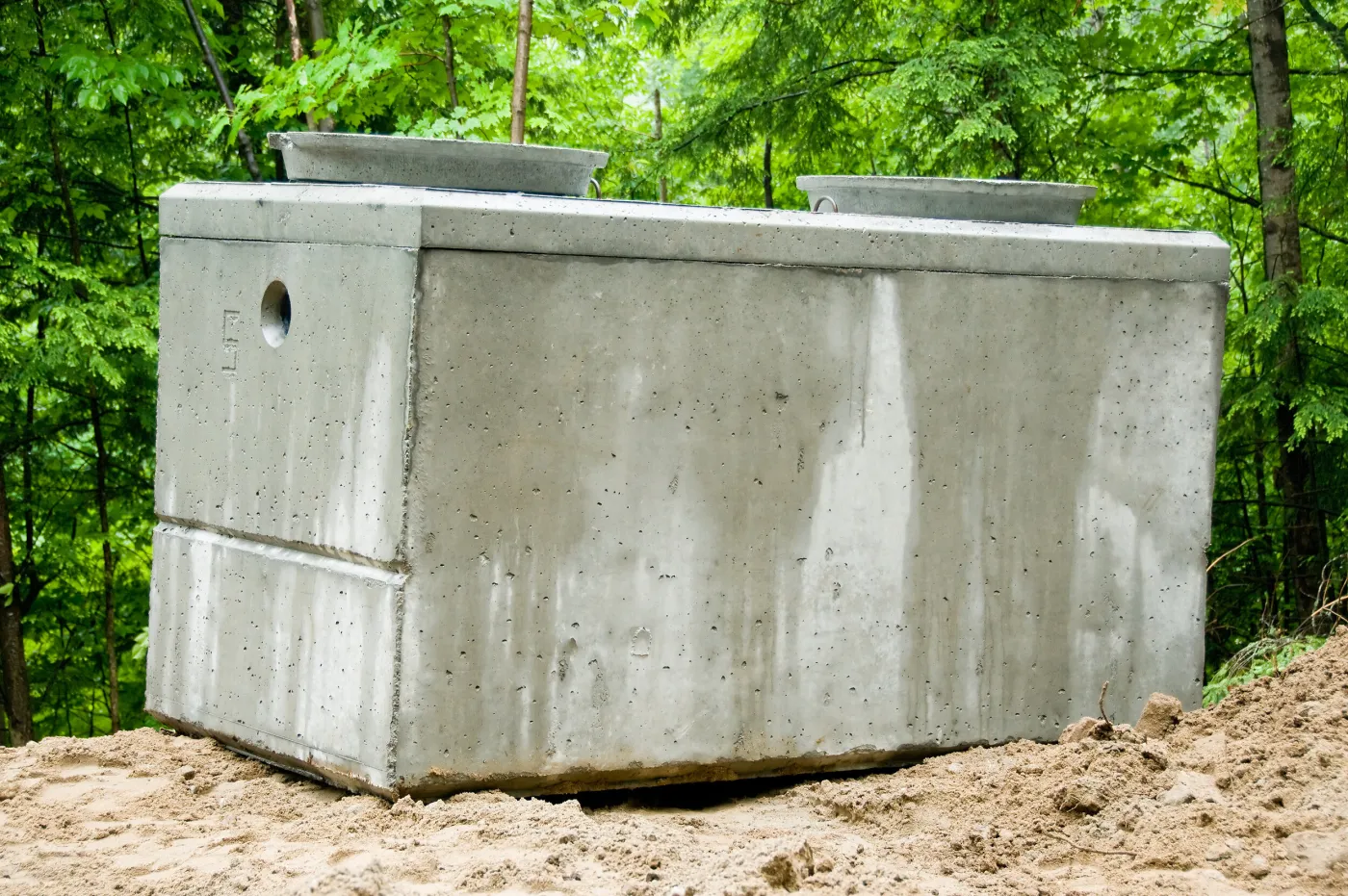
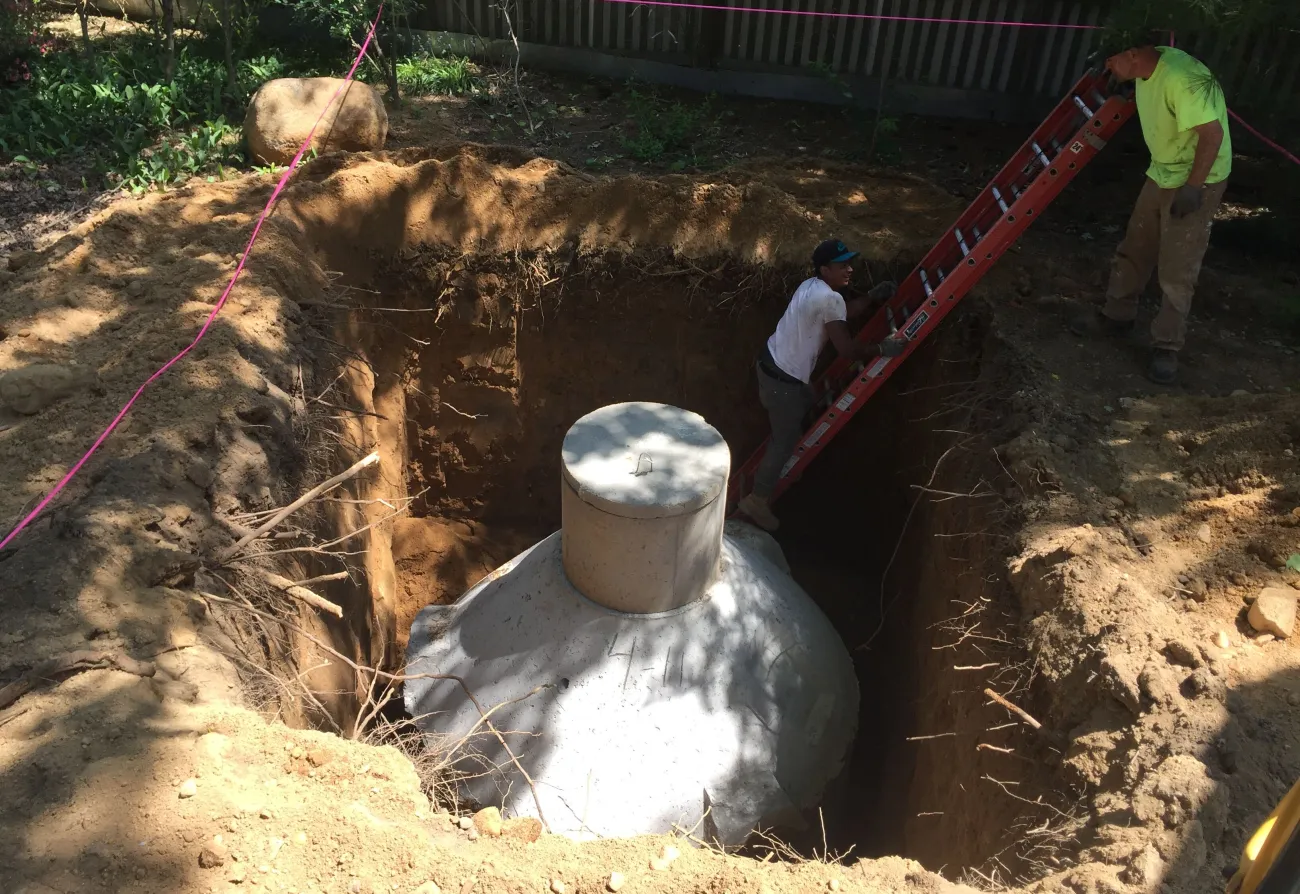
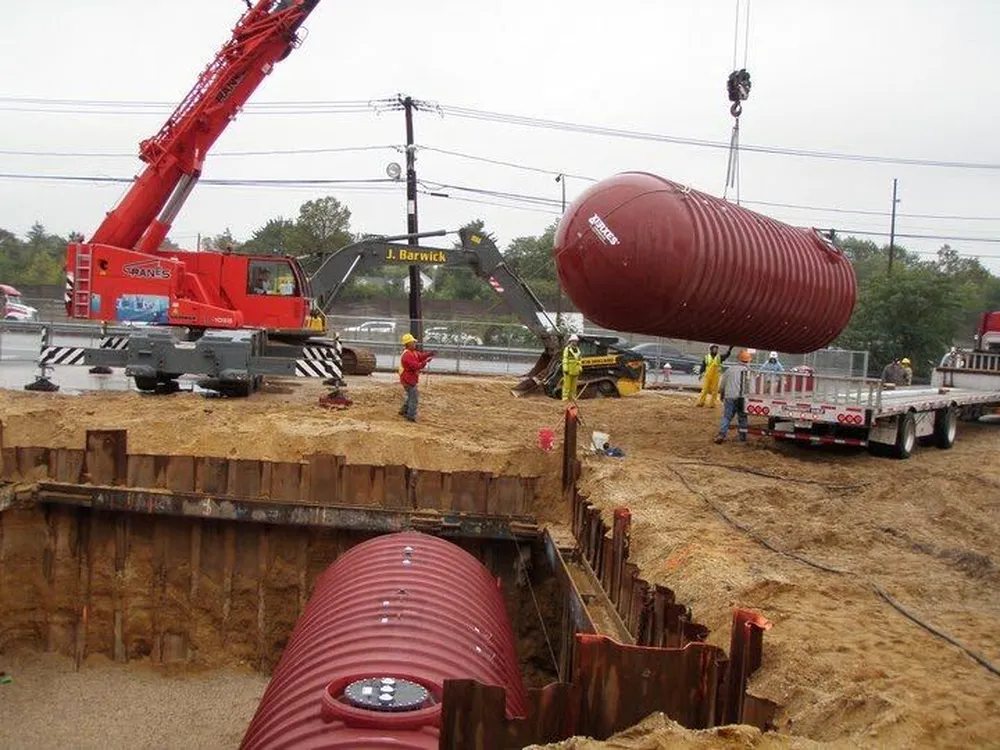
Tanks fail in a few ways. Concrete lids and walls crack, steel tanks rust through, and broken baffles let solids run out to the field. We open the ground with the same excavators we use for foundation and utility digs. A pumping company empties the tank first, then we do the repair and backfill.
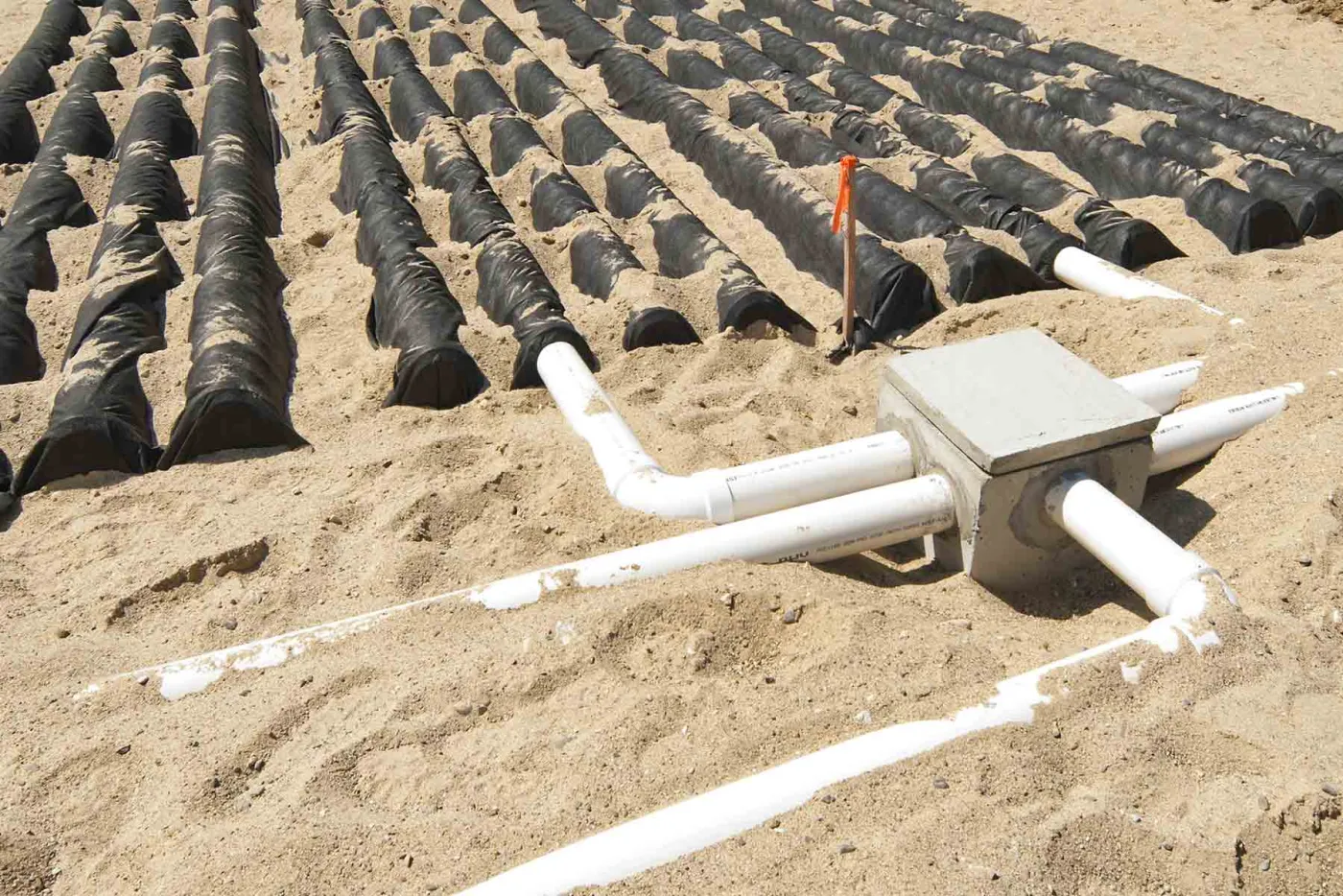
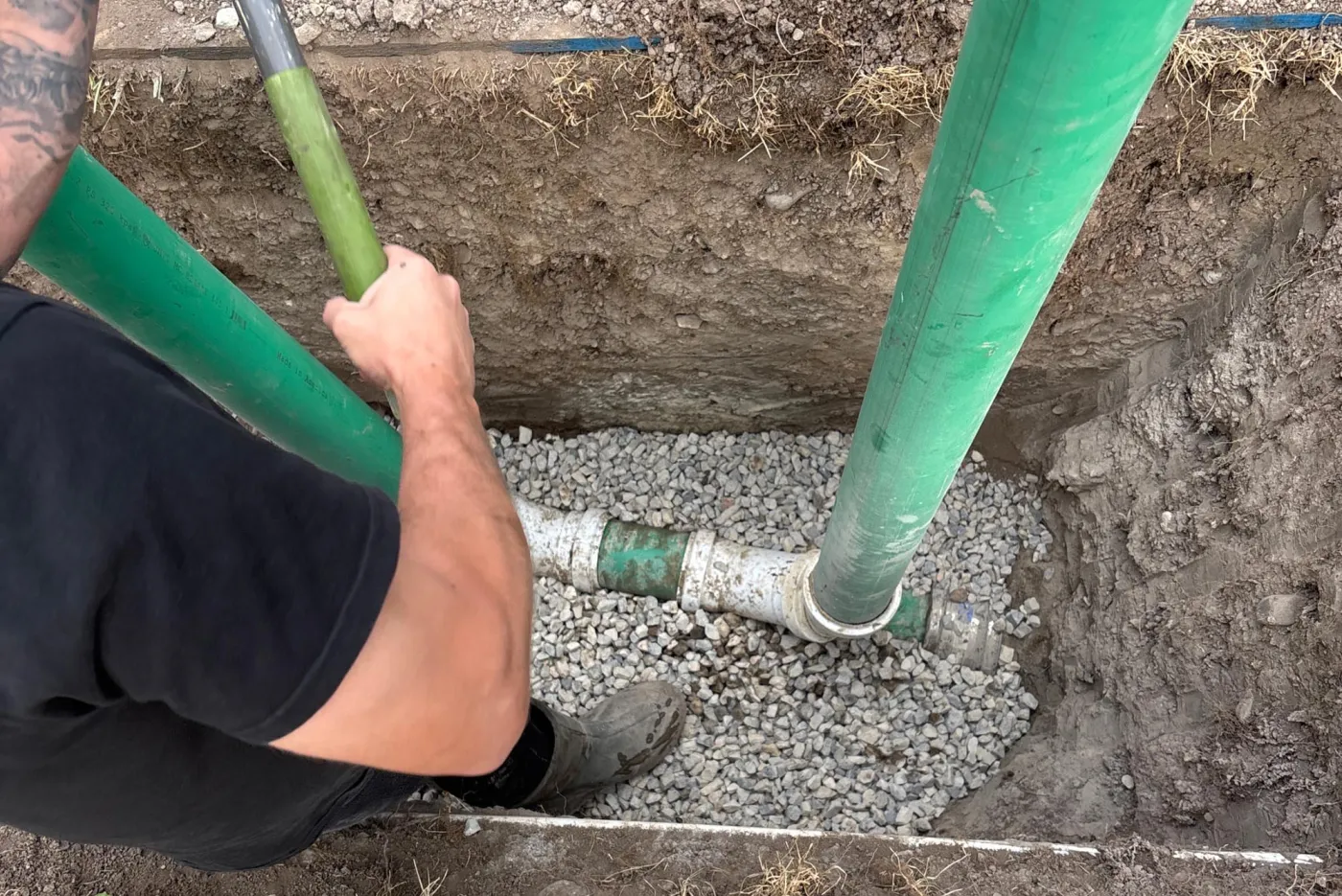
The distribution box sits between the tank and the field and splits the flow between the lines. When it settles or cracks, one line takes everything and that part of the field floods. Setting a new box back to level is one of the smaller repairs on a system.
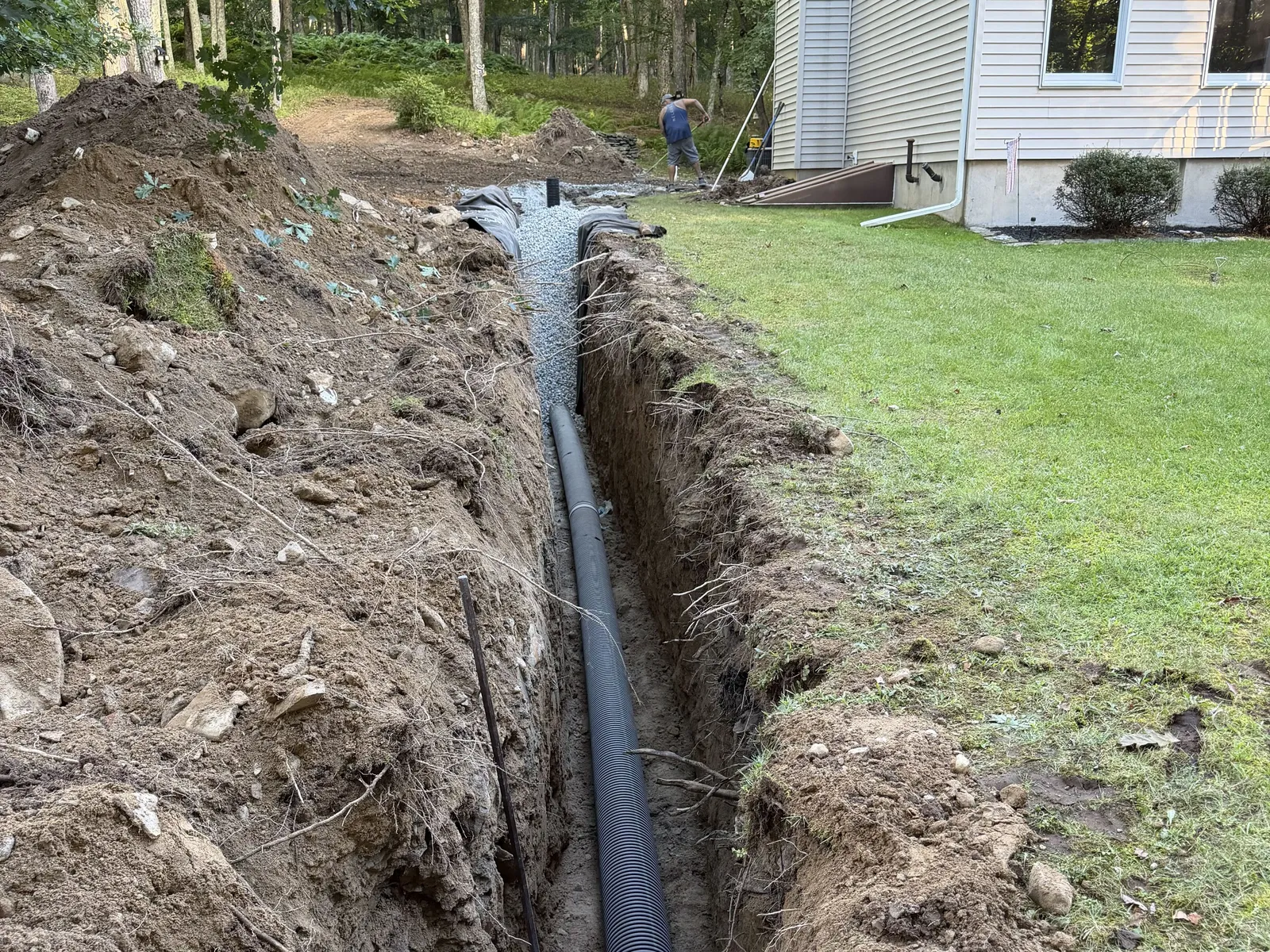
Lines fail too. Roots find the joints, a run bellies where the trench settled, and equipment crushes shallow pipe. We replace the run and bed it on stone so the new trench holds its grade. While the tank is open we can set risers and lids up to the surface.
Drainfield Repair or a New Absorption Area
Often the field is fine and something upstream failed. Replace the box, the baffle or the crushed lateral and the system runs again. That is the outcome we want, and it happens on plenty of calls.
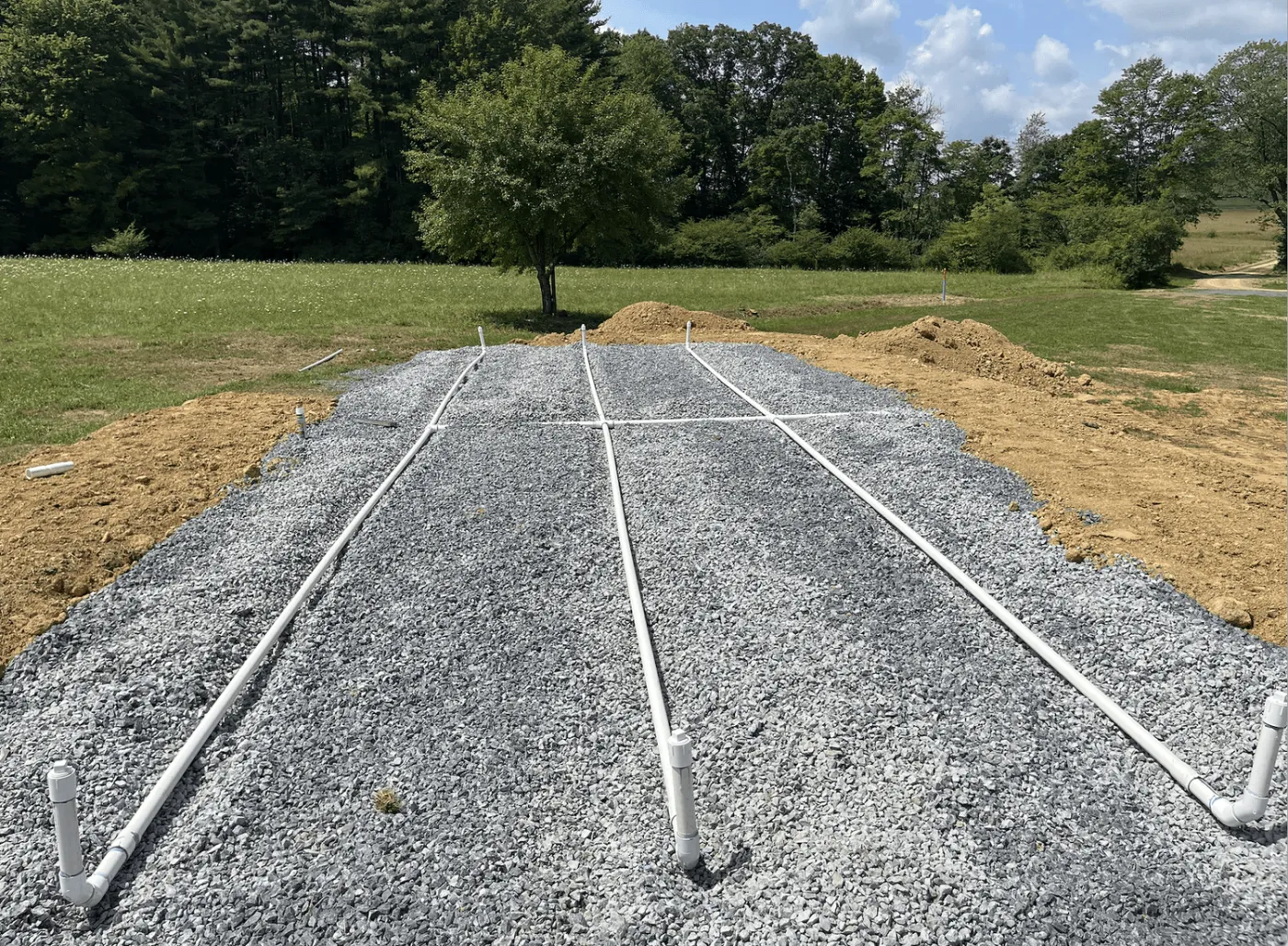
Other times the soil under the field has sealed up and will not take water. At that point the ground itself is the problem. The fix is a new absorption area, and here that often means a sand mound. Shallow bedrock and slow soils are why sand mounds are common around Pike County.
Repairs need a permit. In Pennsylvania it goes through your township or borough sewage enforcement officer. Penn State Extension tells homeowners to call that officer before any major septic repair. In New Jersey and New York the county health department handles the permit.