Why yard drainage is hard on Pike County lots
Soils around Milford formed in glacial till left by the ice, over sandstone and shale. Many of them hold a fragipan, a dense layer that water moves through slowly. That layer often sits within the first two or three feet of soil.
Rain soaks down, reaches the fragipan and stops. It spreads sideways and sits, which soil scientists call a perched water table. That is the water in your yard in April, and the damp on your basement wall. Shallow rock ledge does the same thing, and a hillside lot aims all of it at the house.
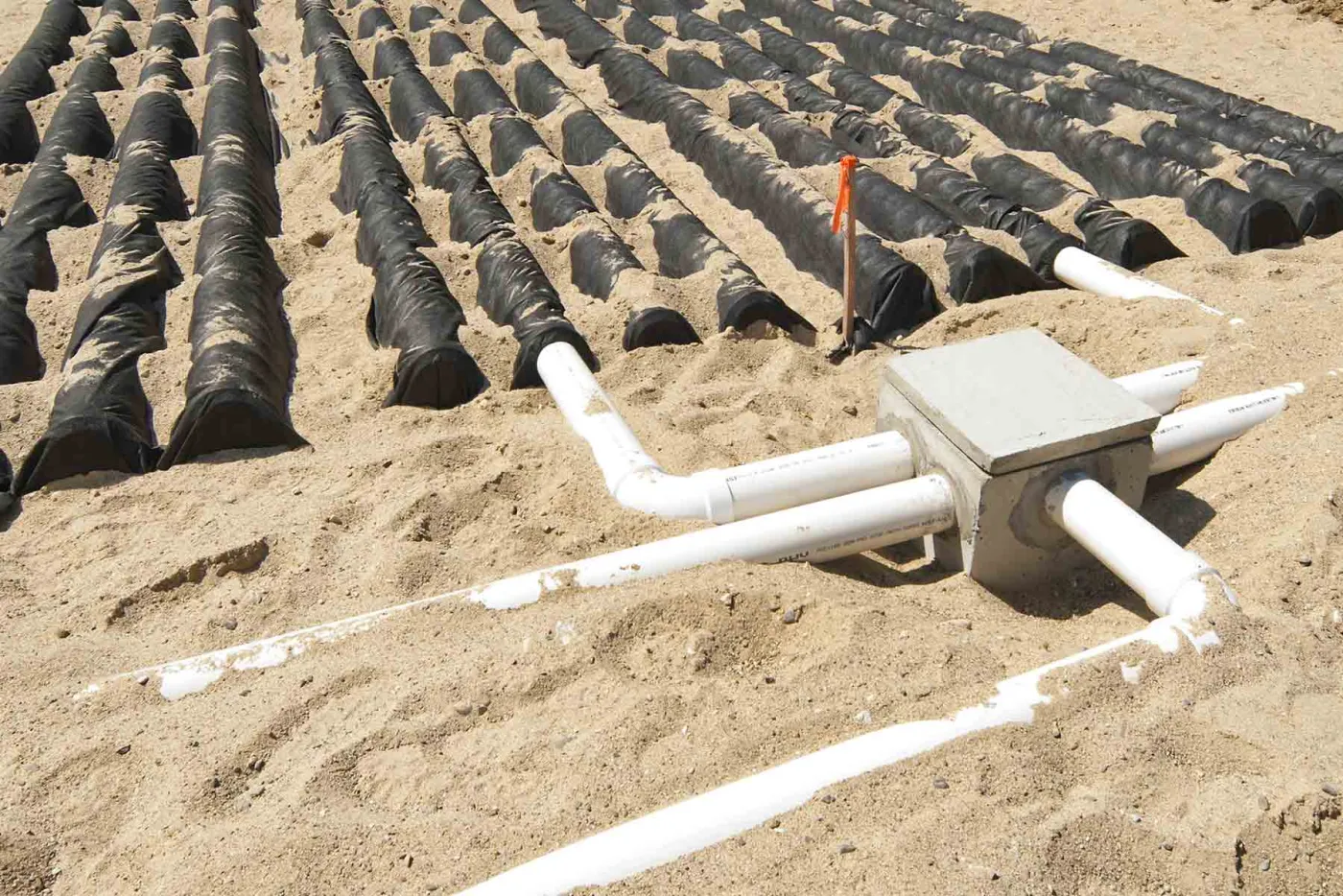
Wet ground can also come from the septic system. Soggy ground and odor over the absorption area usually point to a failing septic drainfield. We check that first, because the repair is a different job.
French drains, curtain drains and catch basins
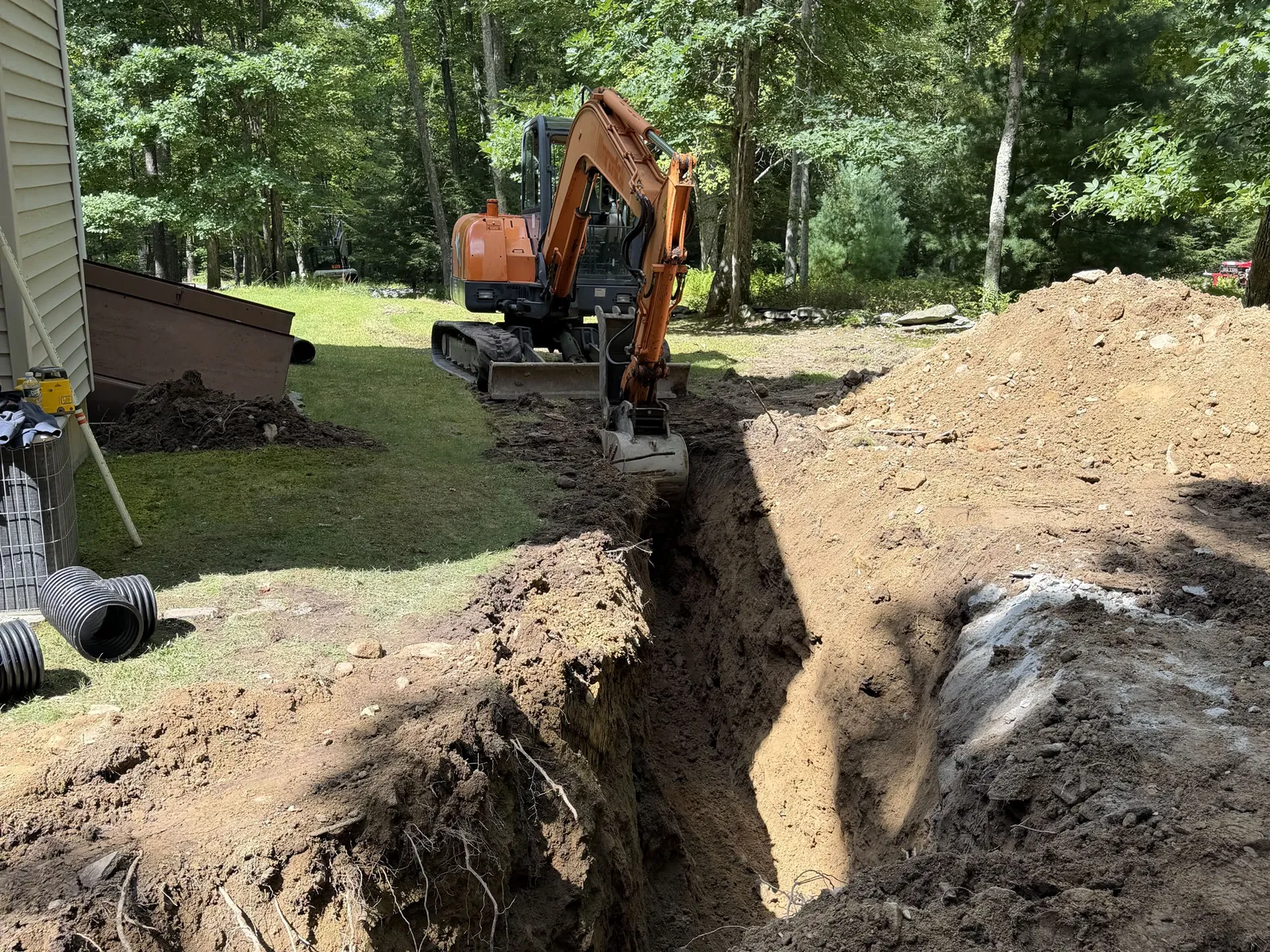
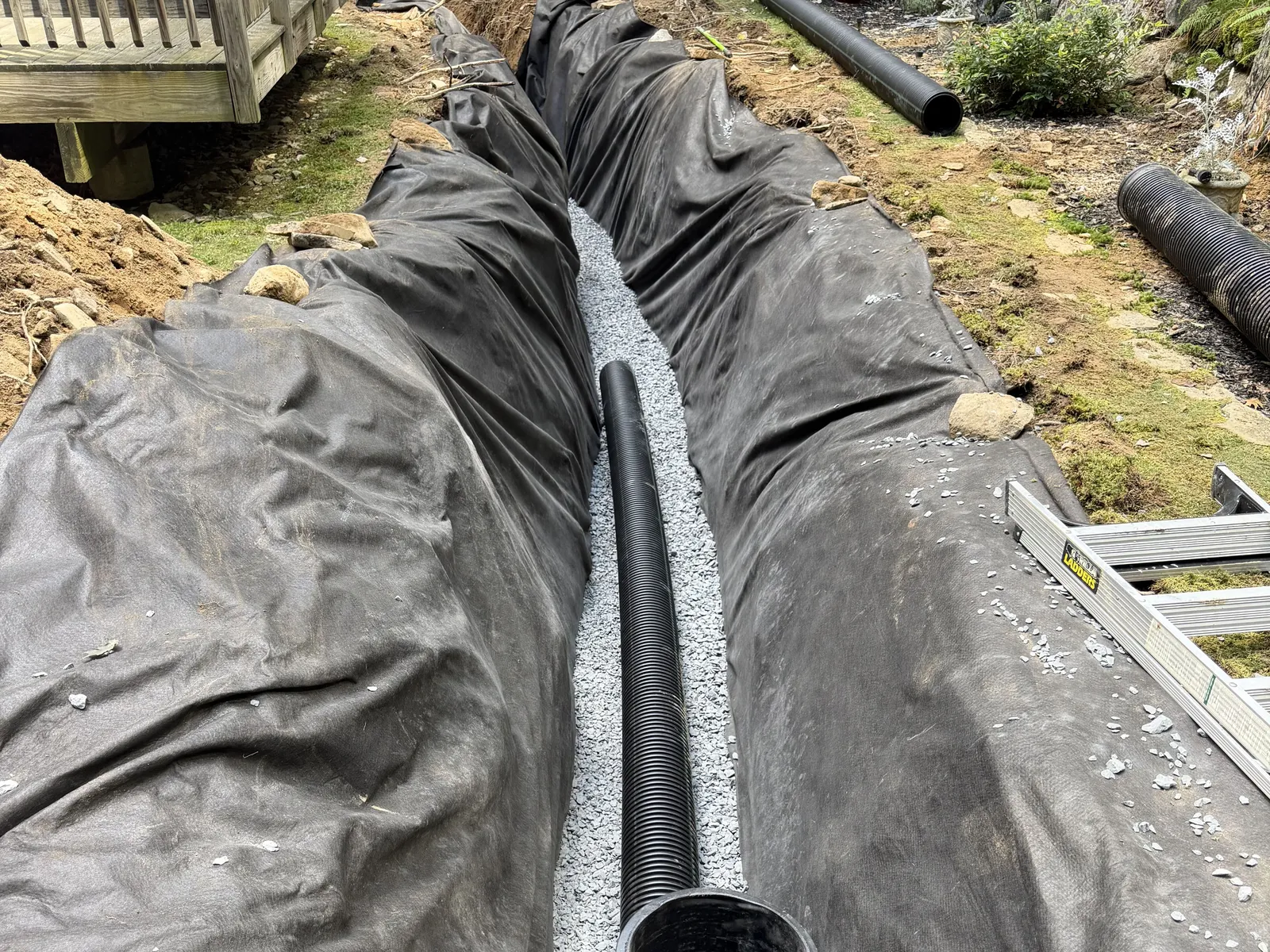
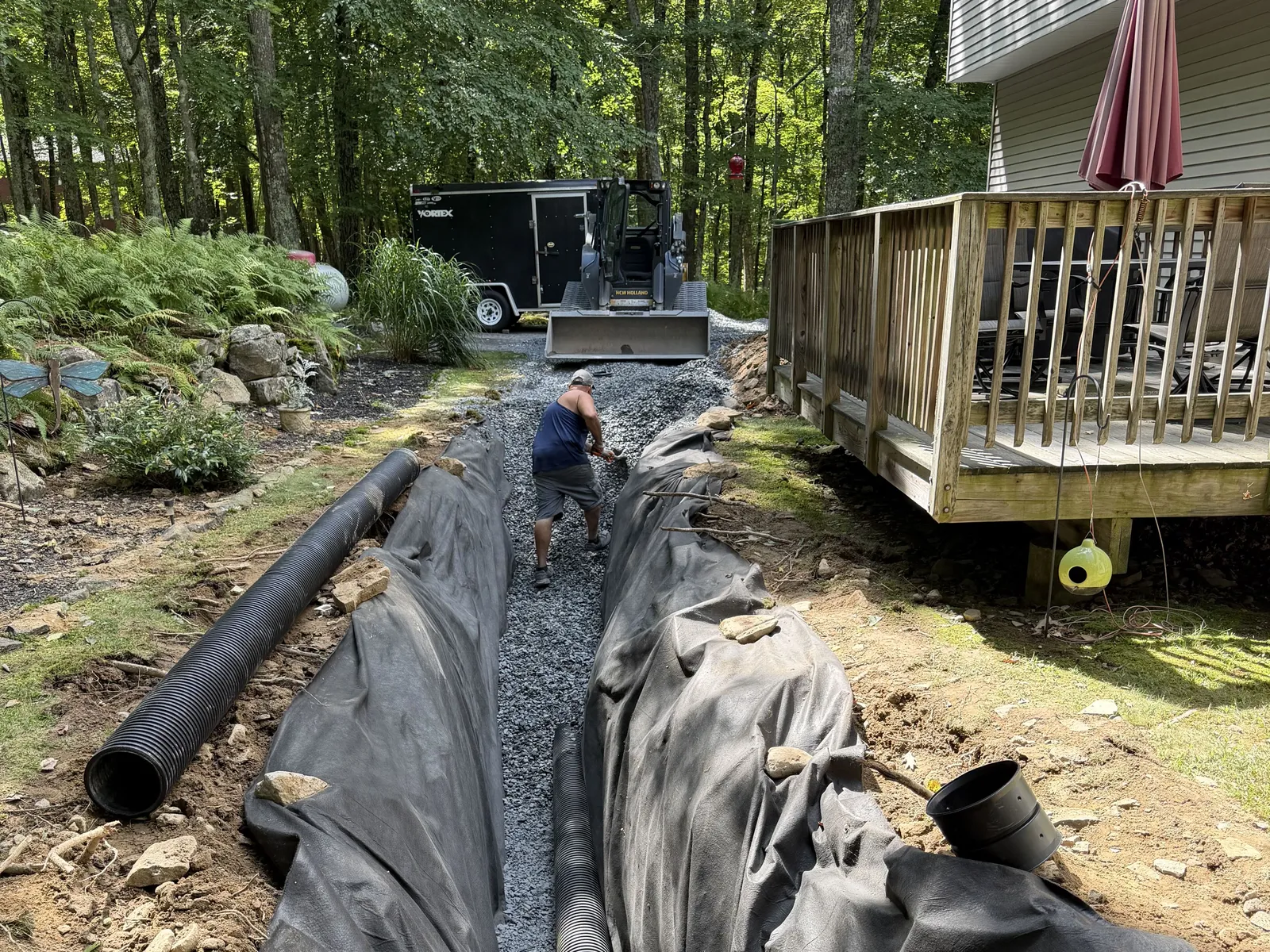
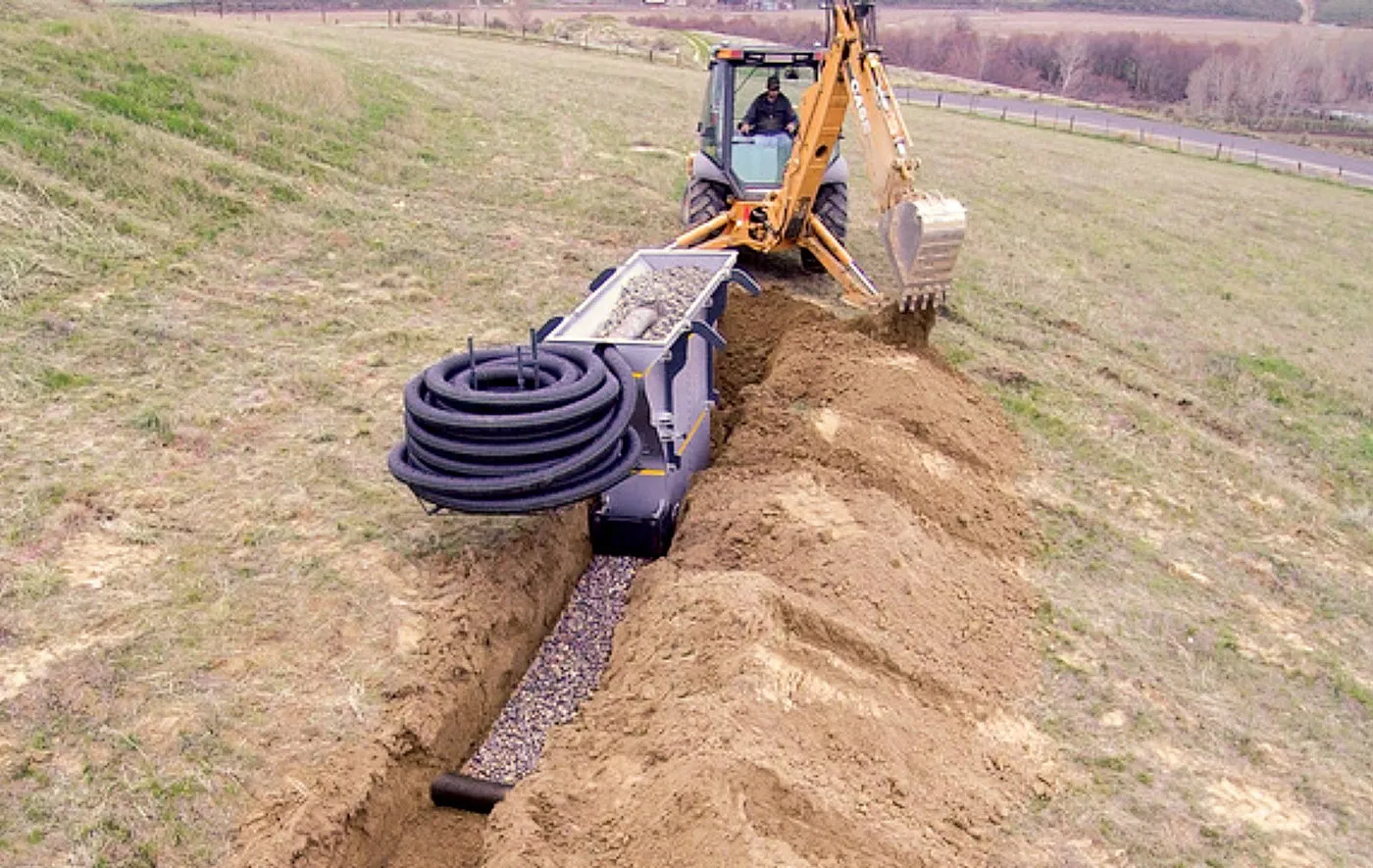
A French drain is a trench of washed stone with a perforated pipe in the bottom. Filter fabric wraps the stone so soil does not clog it. The pipe carries water to a lower spot and lets it out at daylight. Where the trench hits ledge, we break it out the same way we do foundation and trench work.
A curtain drain does the same work higher up the slope. It runs across the hill above the house and catches water before it arrives. On a steep lot the drain often pairs with a retaining wall, which carries stone and pipe behind it.
Catch basins take the water you can see. A grated box sits in the low spot, and a solid line carries it off to an outlet. We also re-run footing drain lines and the buried lines from downspouts out to daylight. Extension guidance puts roof water at least 10 feet from a house with a basement.
Swales, culverts and stormwater drainage repairs
Pipe is not always the answer. On open ground a swale moves more water than a pipe and stays easier to keep clear. We cut swales and regrade low spots so the surface carries water to an outlet.
Culverts and cross pipes carry water under a road or an access lane. We size the pipe to the plan and set the ends so the banks hold. Where a pipe crosses a stream or a wetland, Pennsylvania reviews that work under Chapter 105. In Pike County those reviews go through the county conservation district.
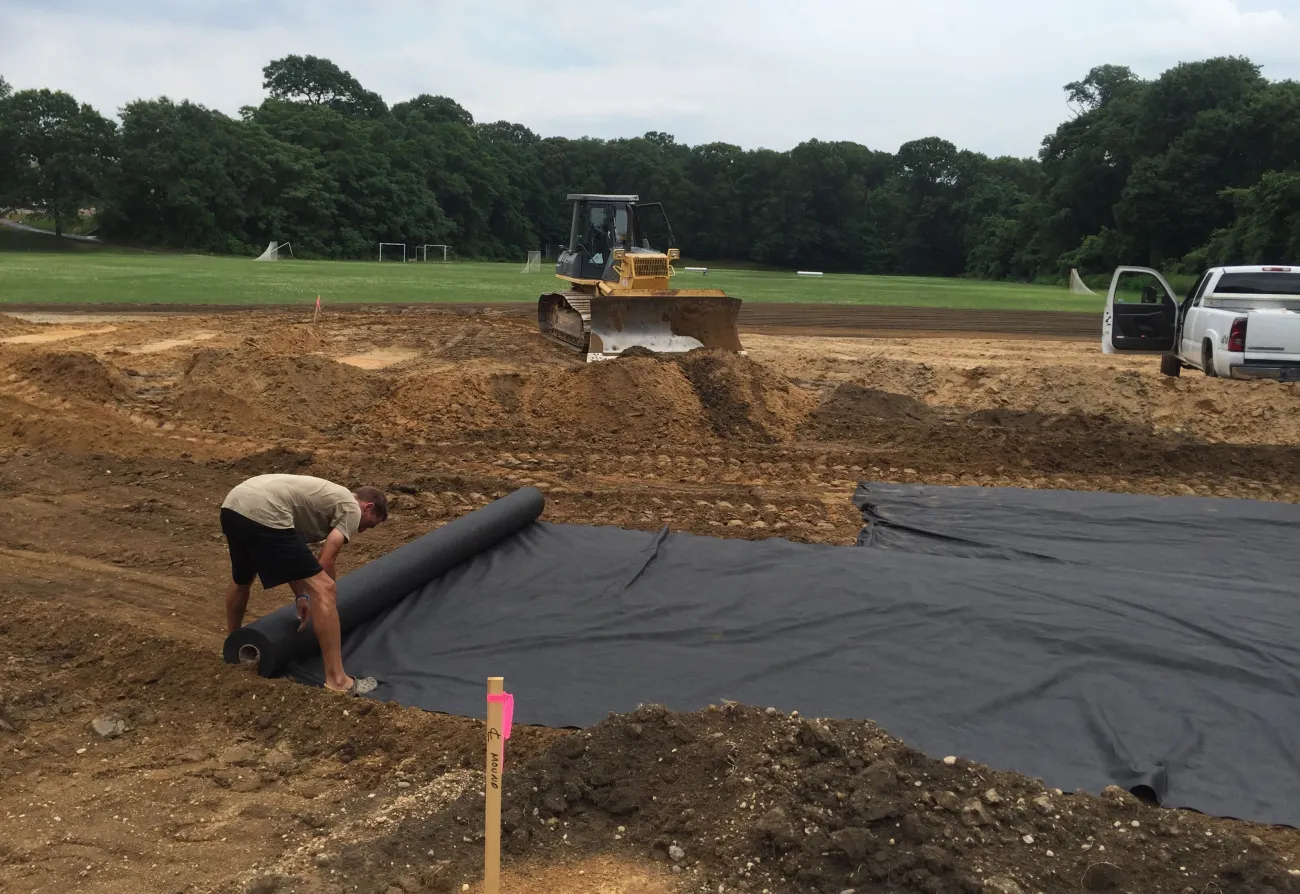
Earth disturbance carries rules here. In Pennsylvania an erosion and sediment control plan starts at 5,000 square feet, and an NPDES permit at one acre. Every dig starts with 811. That is PA One Call here, New Jersey One Call and Dig Safely New York across the river.