Site Prep and Grading
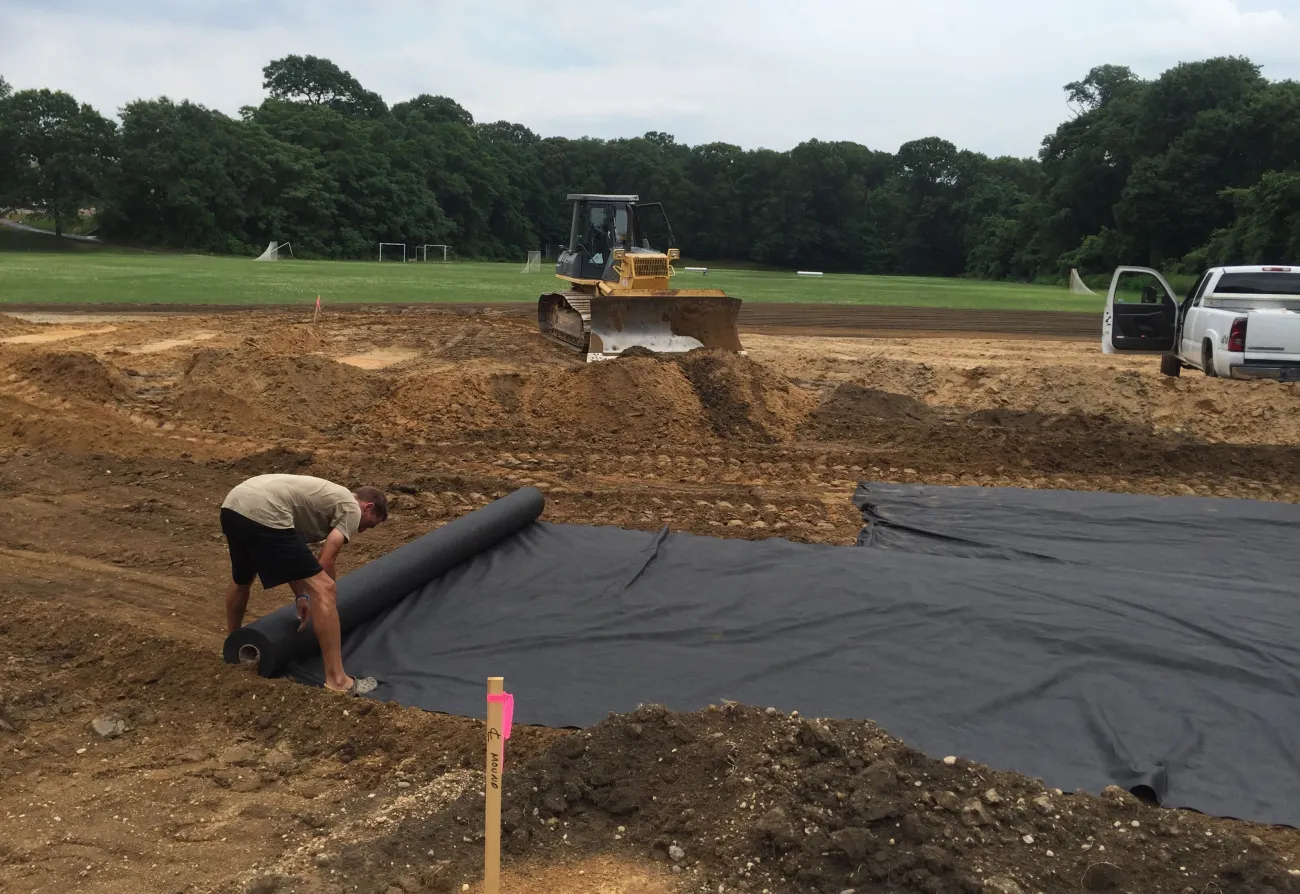
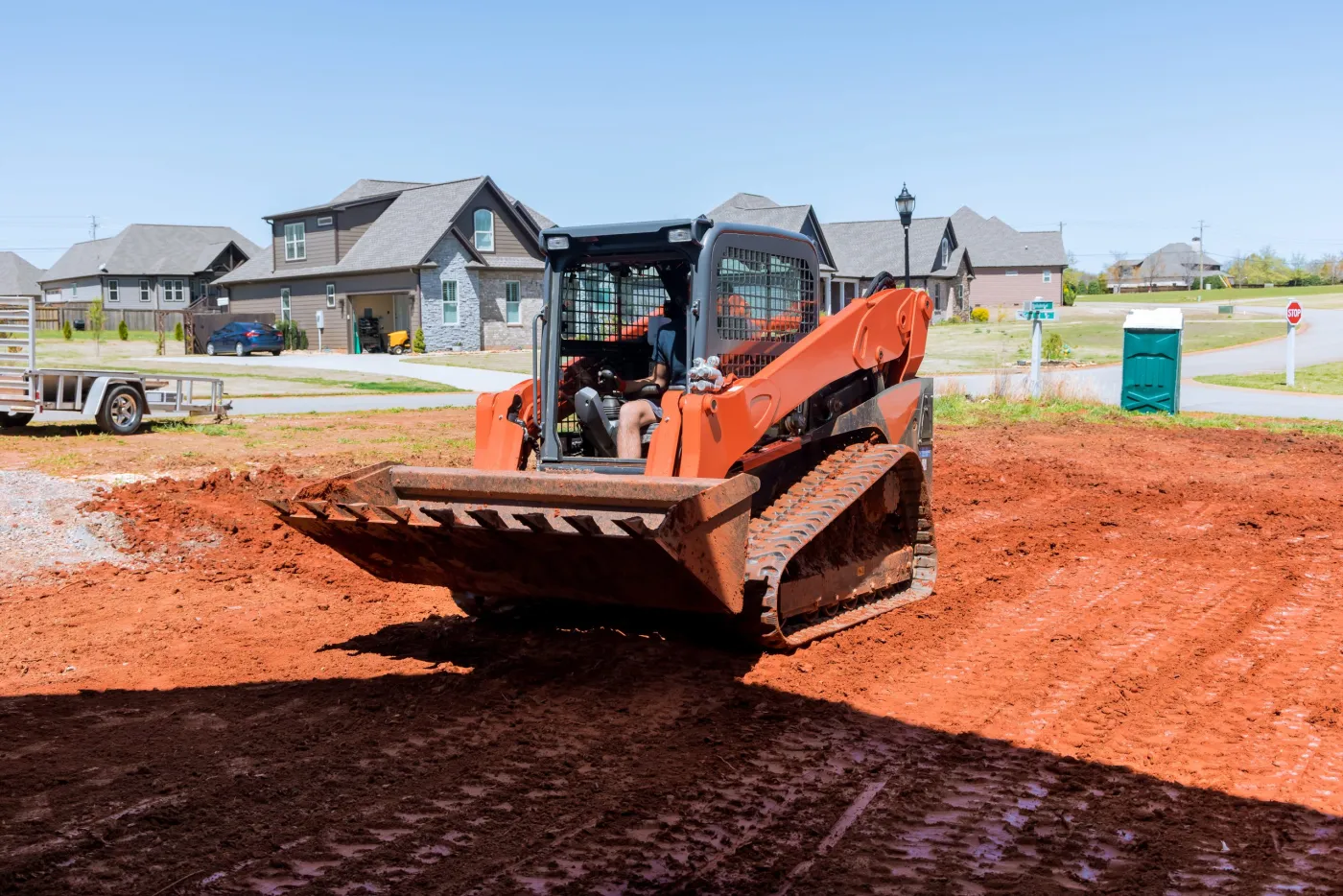
Site prep and grading for new homes, barns and commercial buildings around Milford. We build pads, cut and fill, place stone base and put in private roads and access lanes.
Learn More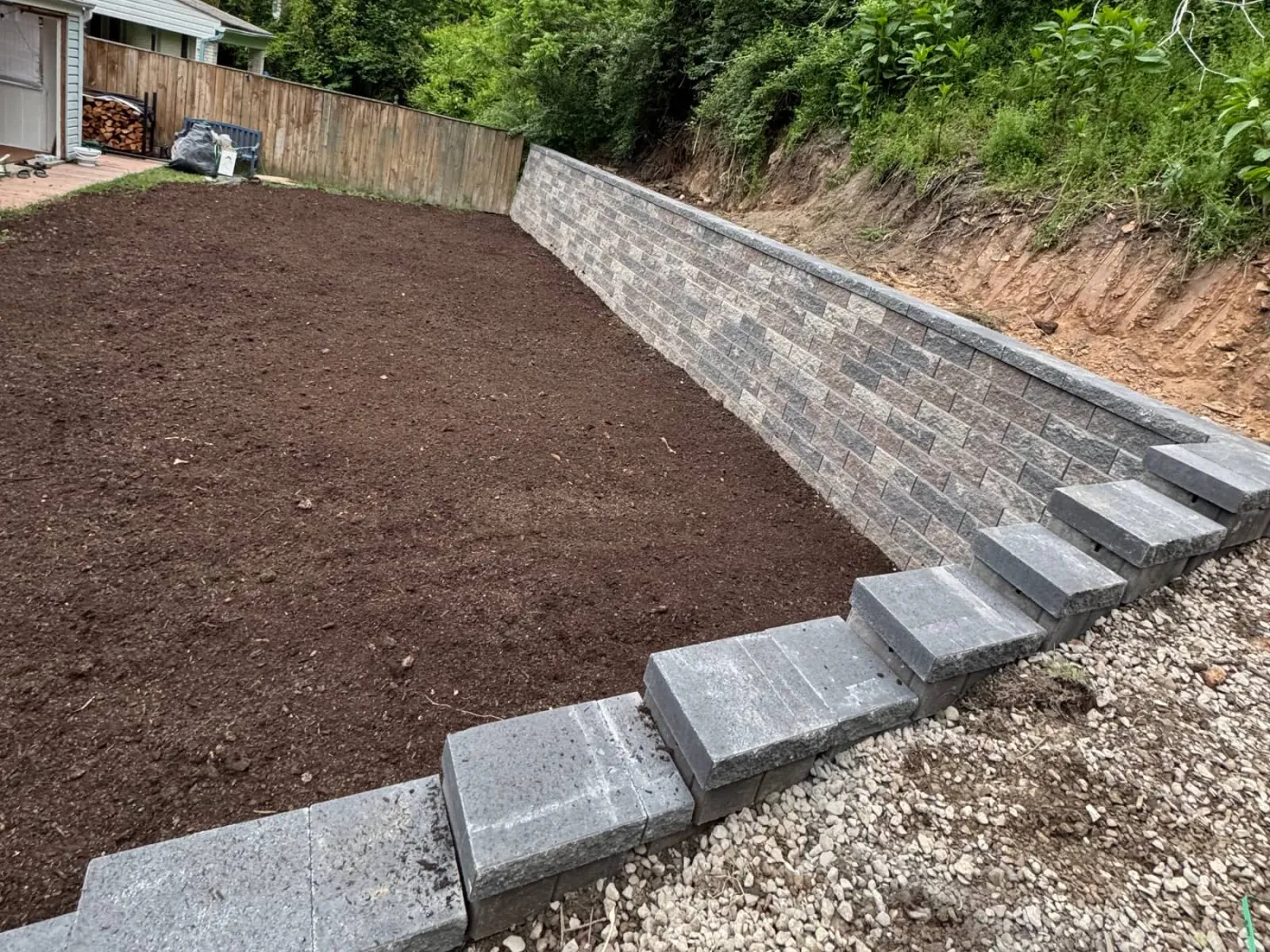
Ground moves when you cut into a hill. A retaining wall holds that cut and gives you flat, usable ground above or below it. Sawkill Environmental builds block retaining walls and boulder walls with the same excavators we run for foundation and utility digs. We build them on hillside lots across Pike County and the tri-state corner around Milford.
Most walls here sit on glacial till, boulders and shallow rock ledge. That ground gets dug out and replaced with compacted stone before a block goes down. Water is the other half of the job, so washed stone and a perforated pipe go in behind the wall. The pipe runs out to daylight and can tie into the rest of the yard drainage work.
Tell us about the job. We will get right back to you.
A concrete block retaining wall gives you a clean, straight face. The blocks lock together course by course and step back into the hill as the wall goes up. Block suits walls along a yard, around a building pad, or anywhere a sloped lot needs a level area.
A boulder wall uses large stone set one piece at a time with an excavator. It fits rough ground and bigger cuts, and it looks right on a wooded Pocono lot. Boulders that come out of a dig on the same site can sometimes go back into the wall.
Which one you use comes down to the look, the height of the cut and the ground under it. Both types get the same base and the same drainage behind them.
The base carries the whole wall. We dig out topsoil and soft ground along the wall line and cut down to firm material. Crushed stone goes in, gets leveled and compacted, and the first course sits below finished grade.
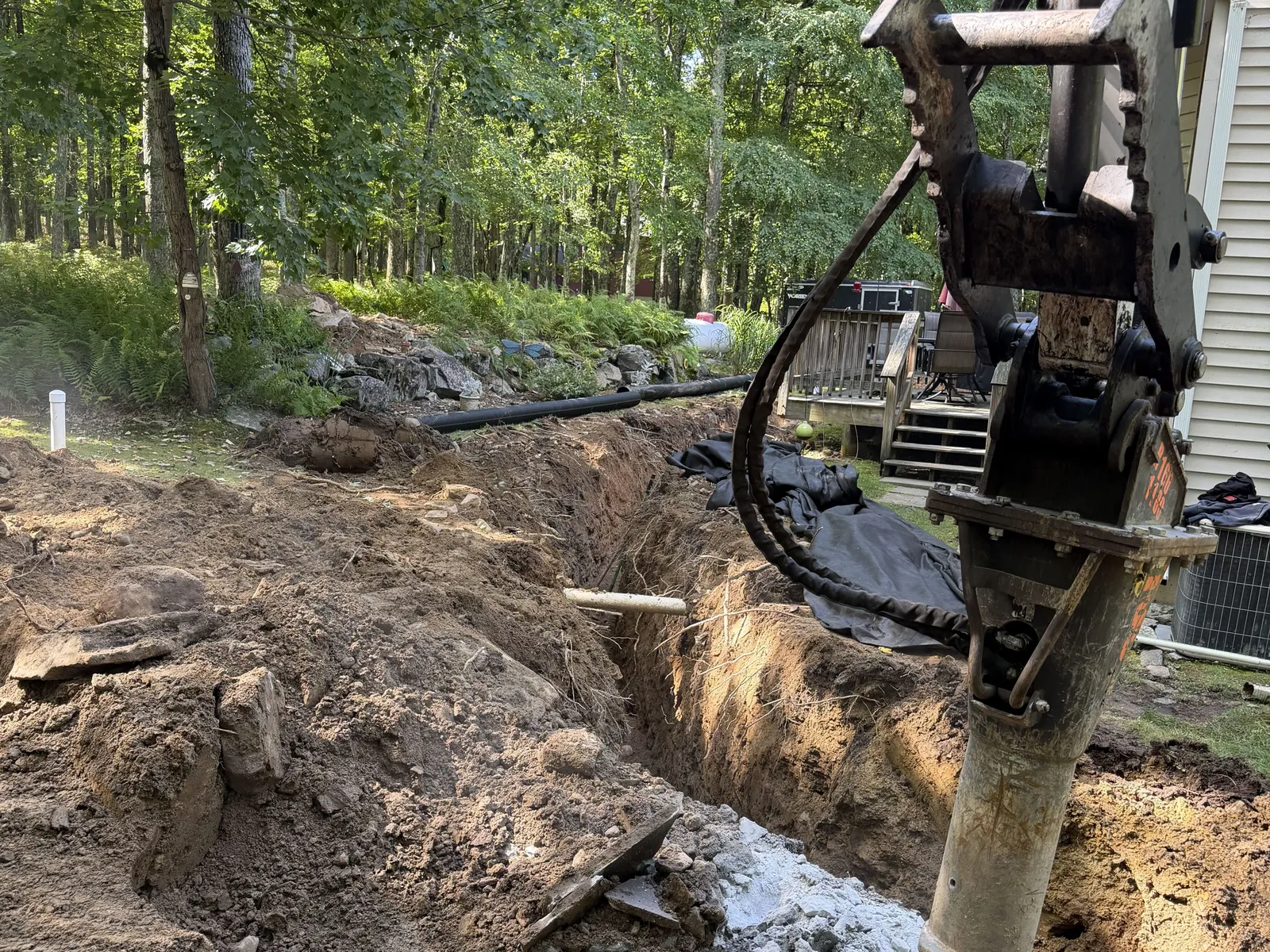
Behind the wall we place washed drainage stone and a perforated pipe at the bottom of it. Filter fabric keeps soil out of the stone. The pipe runs out to daylight or into a drain line, so groundwater and runoff have somewhere to go. Water trapped behind a wall freezes and swells, and that pressure tips walls forward over a few winters.
Backfill goes in one lift at a time and gets compacted as the wall goes up. Taller walls often call for reinforcement grid built into that backfill, per the wall design. The cap course goes on last. Then the ground above and below the wall gets graded to move water away from it.
A lot of the walls we build are part of a bigger dig. A cut for a building pad needs a wall to hold the uphill side. A private road or access lane on a slope needs one to hold the bank. On lake-community lots, a wall often makes room for a septic absorption area on sloped ground.
When a wall is part of site prep and grading, it goes in with the rest of the work. The cut, the wall, the backfill and the finish grade stay on one schedule. On a wooded lot, the trees, stumps and ledge come out before we dig the wall line.
We work about 25 miles out from Milford, into Pike and Wayne counties in Pennsylvania. That area also covers Sussex County in New Jersey and Orange and Sullivan counties in New York. Estimates are free, and you can call or text (973) 552-8580.
Free, no-obligation estimates across the Pennsylvania, New Jersey and New York tri-state area.
(973) 552-8580From the first call or text to the final grading, here is how it goes.
Call or text (973) 552-8580 and tell us about the property. New builds, empty lots and failing systems all start here.
We come out and look at the property, the soil and where a system can fit. Estimates are free.
We dig the soil test pits. The township sewage enforcement officer runs the probes and the percolation tests, and approves the design. In New Jersey and New York, the county health department issues the permit.
Once the permit is issued, we set the tank and run the lines to the distribution box. Then we build the absorption area to the approved design. Conventional in-ground beds and elevated sand mounds are both common on lots around here.
The system gets inspected before anything is covered. In Pennsylvania the township sewage enforcement officer does that inspection. Then we backfill, grade the ground back out and clean up the site.
Common questions about retaining walls across the Pennsylvania, New Jersey and New York tri-state area. If yours is not here, call or text and ask.
Site prep and grading for new homes, barns and commercial buildings around Milford. We build pads, cut and fill, place stone base and put in private roads and access lanes.
Learn More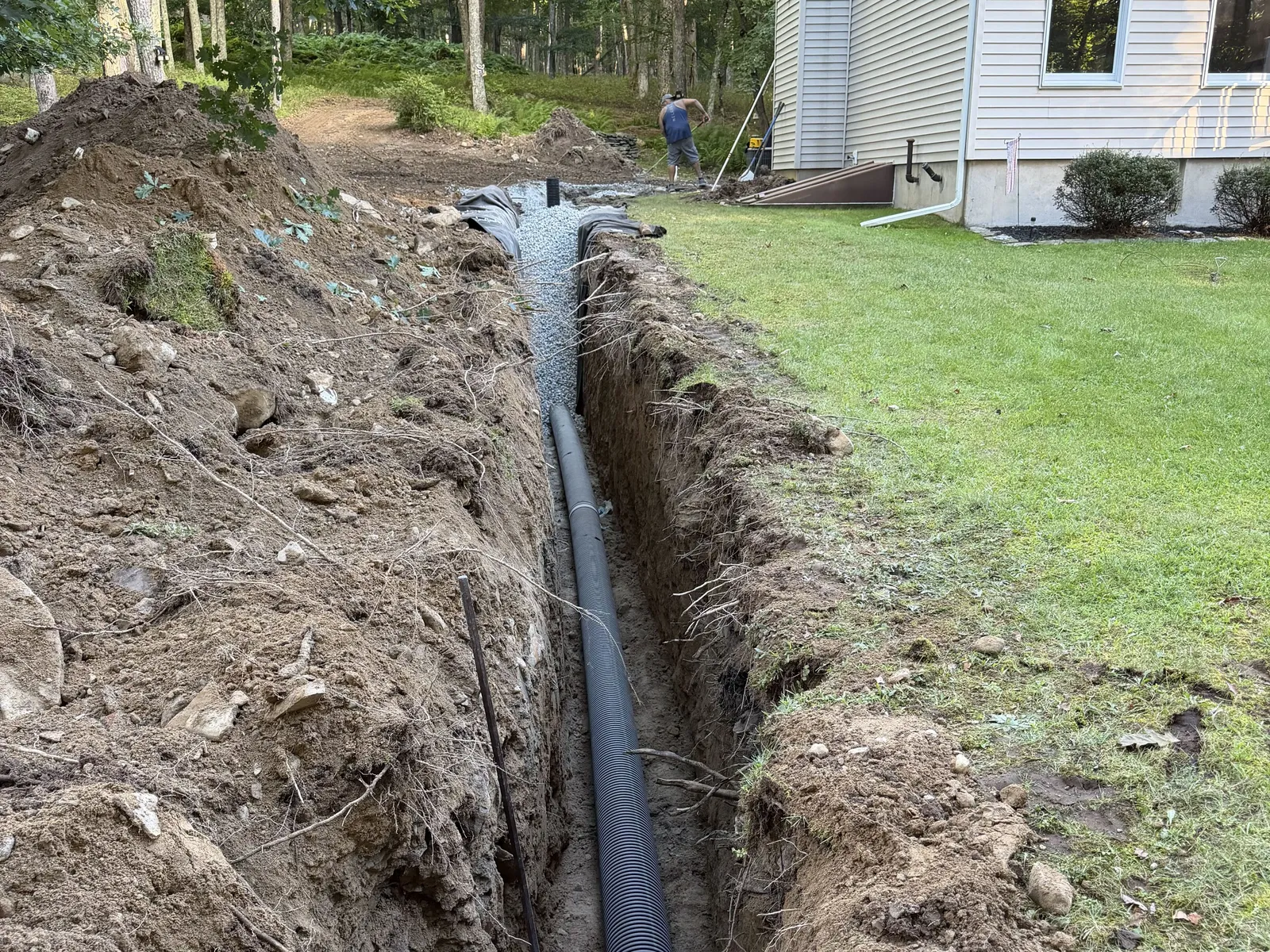
We install French drains, curtain drains, catch basins and culverts, and regrade wet ground. Exterior stormwater drainage for homes and commercial properties around Milford.
Learn More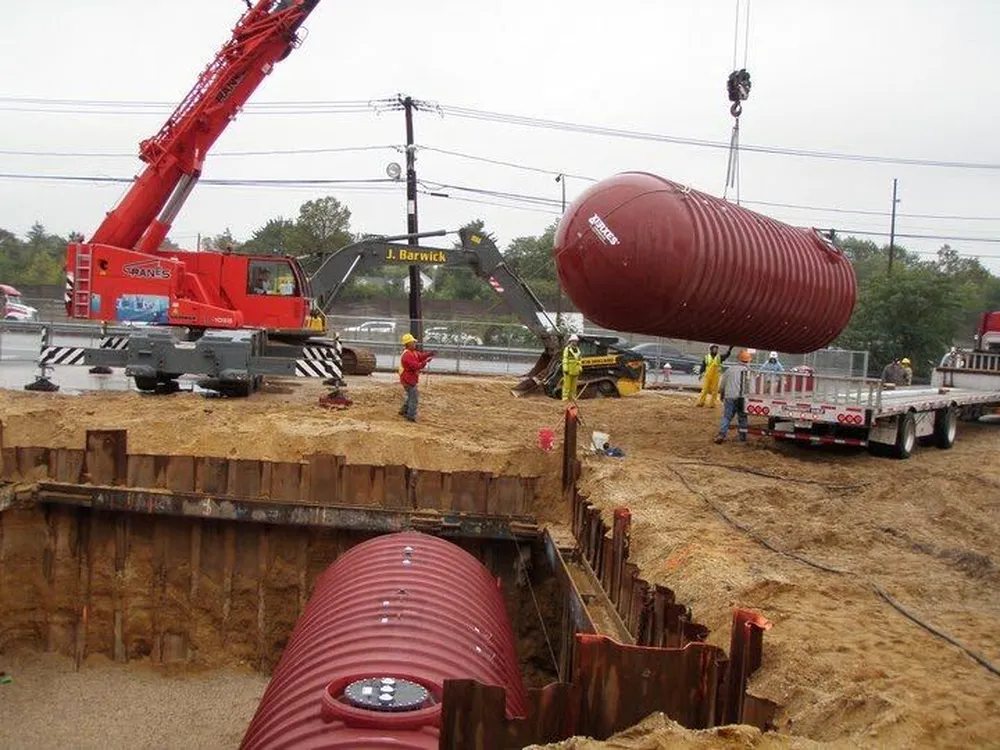
We handle general excavation for homes and commercial sites around Milford: foundation and basement digs, footings, trenches and rock ledge. We run our own excavators and equipment, so the dig, the backfill and the compaction stay with one company.
Learn MoreSawkill Environmental is licensed and insured, with Pennsylvania Home Improvement Contractor registration PA HIC #PA225040. That number is public, and you can look it up before you hire anyone.
We run our own excavators and equipment. That keeps the test pits, the install and the final grading on one schedule.
We work from Milford out about 25 miles. That covers Pike and Wayne counties in Pennsylvania, Sussex in New Jersey, and Orange and Sullivan in New York.
Estimates are free. We come out, look at the property and tell you what the job needs. Call or text (973) 552-8580.
Tell us about the property and what you need done, and we will come back with a free estimate. You can also call or text (973) 552-8580.
Tell us about the job. We will get right back to you.