
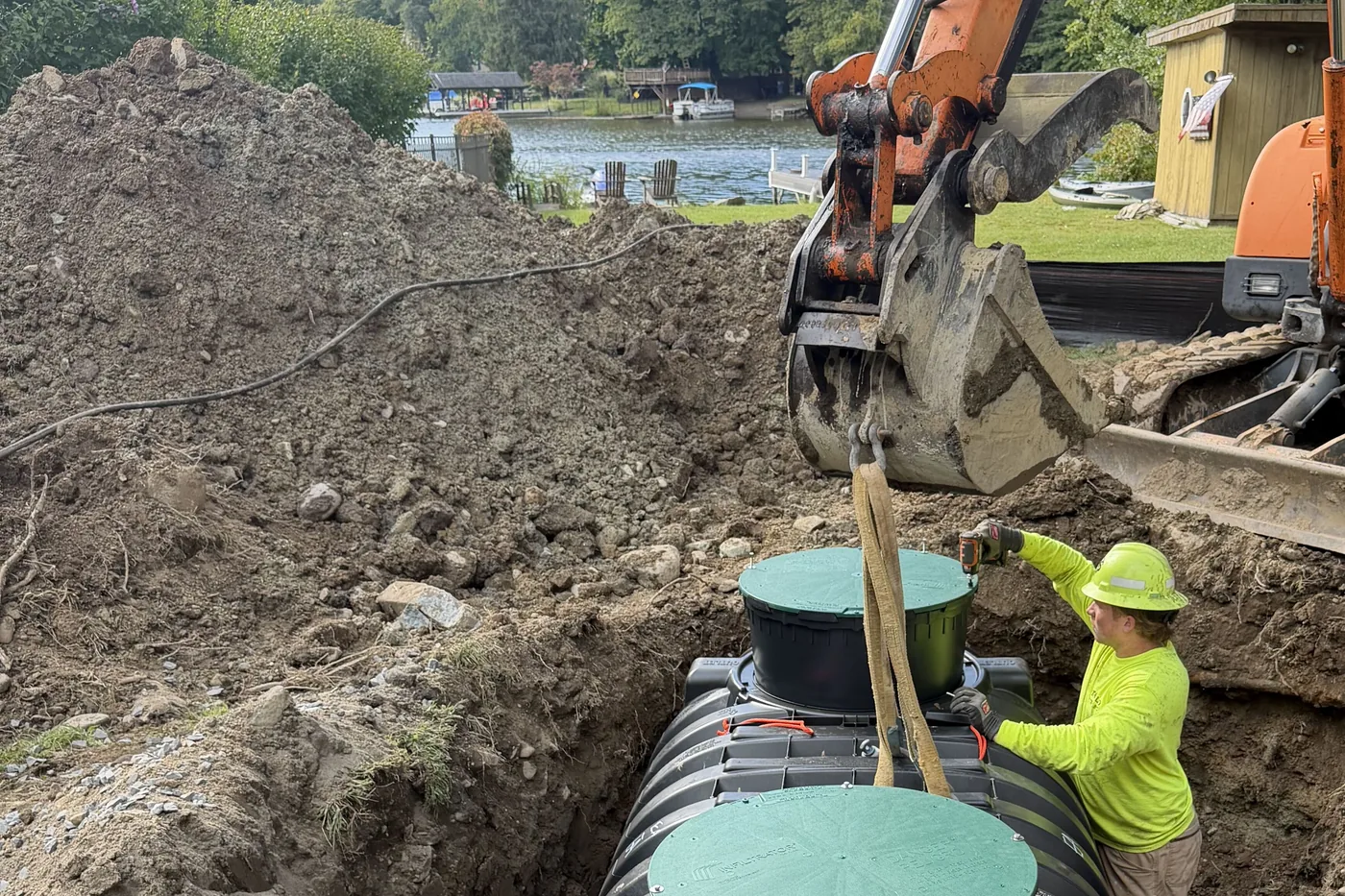
How Much Does an Aerobic Septic System Cost in Pennsylvania?
Two national cost guides put an aerobic septic system at about $10,000 to $20,000. The same two guides put a conventional system at about $3,000 to $8,000. A third national guide lists aerobic treatment units higher, at $20,000 to $40,000 and up.
The difference starts with the treatment unit. It adds an aerator and an alarm panel ahead of the absorption area, and it needs power to run. These are market numbers, not our price list. We cover the install itself on our aerobic septic system installation page.
What does an aerobic septic system cost in Pennsylvania?
The ranges below come from national guides, not Pennsylvania price lists. Use them to plan, then let the soil tests set the real number.
| Item | Published range | Source |
|---|---|---|
| Aerobic septic system | $10,000 to $20,000 | Two national cost guides |
| Aerobic treatment unit system | $20,000 to $40,000 and up | A third national guide |
| Conventional (anaerobic) system | $3,000 to $8,000 | Two national cost guides |
| Converting a conventional system to aerobic | $5,000 to $10,000 | A fourth national guide |
| Septic permits | $450 to $2,300 | National cost guide |
| Aerobic inspections, per year | $200 to $800 | Building inspection reference |
The higher guide files aerobic units under engineered systems. It calls that group the most complex and expensive to install.
The conversion row covers adding an aerobic unit to an existing conventional system. Talk to your sewage enforcement officer before you plan a change like that.
Why does an aerobic system cost more than a conventional one?
One national guide calls aerobic systems more than double the cost of a conventional system. The extra money buys extra treatment.
A conventional septic tank works without air. An aerobic unit adds an aerator that pushes air into the tank. Oxygen-loving bacteria then break the waste down further before the water moves on.
Pennsylvania sets the standard for these units in 25 Pa. Code 73.32. A unit serving a single-family home must carry the NSF seal under Standard 40. The Department of Environmental Protection gives local agencies a current list of units that meet the state standard. This is general information, not legal advice.
Every unit also needs a visual and audible alarm that responds to an electrical or mechanical failure. Sizing for a home starts at 400 gallons a day, plus 100 gallons for each bedroom over three. The maker rates each unit, and the state approves none rated under 400 gallons a day.
Labor runs higher too. A national guide says aerobic systems take more labor to install the pumps and piping. Power for the aerator and alarm panel runs from the house in a trench. An electrician makes the hookup.
How do aerobic, conventional and sand mound systems compare in Pennsylvania?
In Pennsylvania terms, these three names describe different parts of a system. Conventional and sand mound describe the absorption area. Aerobic describes the treatment tank ahead of it.
Your soil picks the absorption area. Where the limiting zone sits 60 inches down or deeper, the absorption area can go in the ground. Those lots can take a conventional in-ground bed, which is standard new septic system installation.
Where the limiting zone sits less than 60 inches down, Pennsylvania requires an elevated sand mound. Mounds are common here, where bedrock is shallow and soils drain slowly. Our sand mound septic system page shows how one is built.
An aerobic unit sits ahead of whichever absorption area the design calls for. It cleans the water first. It does not take the place of the absorption area.
On price, the guides put conventional systems at the low end and aerobic systems well above them. Sand mound prices and regional conventional prices are in our septic system cost guide.
What moves the price on a Pike County lot?
Rock comes first. USGS reports that Pike County’s glacial till is typically thin, under 6 feet. Bedrock is exposed at the surface in many areas. Ledge in the tank hole means more excavation work and more machine time.
Lake lots get tight. Pennsylvania keeps a treatment tank at least 50 feet from a private well. The absorption area has to sit at least 100 feet from a well and 50 feet from lakes and ponds. Those distances can push the system to a harder spot on the lot.
The permit adds its own line. Septic permits in Pennsylvania go through the township sewage enforcement officer. Penn State Extension tells homeowners to reach that officer through their township or borough. One national guide puts septic permits at $450 to $2,300, so ask your township office for its current fees.
Old systems add work. A 2021 sewage plan says many systems around Milford predate the 1969 construction rules. When one fails, the new system goes in as a septic system replacement under today’s rules. The old tank comes out of service, and the new absorption area may need a fresh spot.
What does an aerobic system cost to run each year?
Power is the first yearly cost. A building inspection reference says most aerobic pumps run around the clock. In its worked example, an aerator drawing 86 watts used about 62 kilowatt-hours a month. Multiply that by the rate on your own electric bill to price it.
Service comes next. The same reference puts yearly aerobic inspections at $200 to $800, depending on where you live. A national guide says these units must be inspected at least once a year. Another guide adds that the extra upkeep includes checking the air supply and the electrical parts.
Each unit comes with its maker’s service schedule. Pennsylvania requires the alarm, so treat an alarm as a call to your service provider.
The tank still gets pumped when the sludge builds up. A service provider trained on the unit handles the service visits, and a pumping company empties the tank.
What should you do before pricing an aerobic system?
Start with the soil, because the soil tests set the absorption area and much of the price. The design then shows whether an aerobic unit belongs on your lot.
Sawkill Environmental installs aerobic septic systems around Milford and across the Pennsylvania, New Jersey and New York corner. We are certified installers for Enviro-Aire. We dig the test pits for the sewage enforcement officer. Then we set the unit and build the absorption area to the approved design.
We are licensed and insured, PA HIC #PA225040, and we run our own excavators and equipment. See how we install aerobic septic systems, then call or text (973) 552-8580 for a free estimate.